
R@W Score Risk Self-Assessment
It's free and only takes three minutes to complete.
Upon completion you'll receive your custom 18-page R@W Score Report by email.
The result is just the headline. Your report shows what’s putting you at risk, and what to fix first.
CHECK YOUR RISKSee what you’re missing before it becomes a problem
Your full R@W Score Report has been developed by specialists in workplace safety, governance and Positive Duty compliance.
It is bespoke to your organisation’s size, industry, and location.
Over eighteen pages, we will take your answers and provide a plain-English breakdown of your risk across key compliance areas.
We will also give you priority actions to reduce risk and strengthen compliance immediately.
CHECK YOUR RISK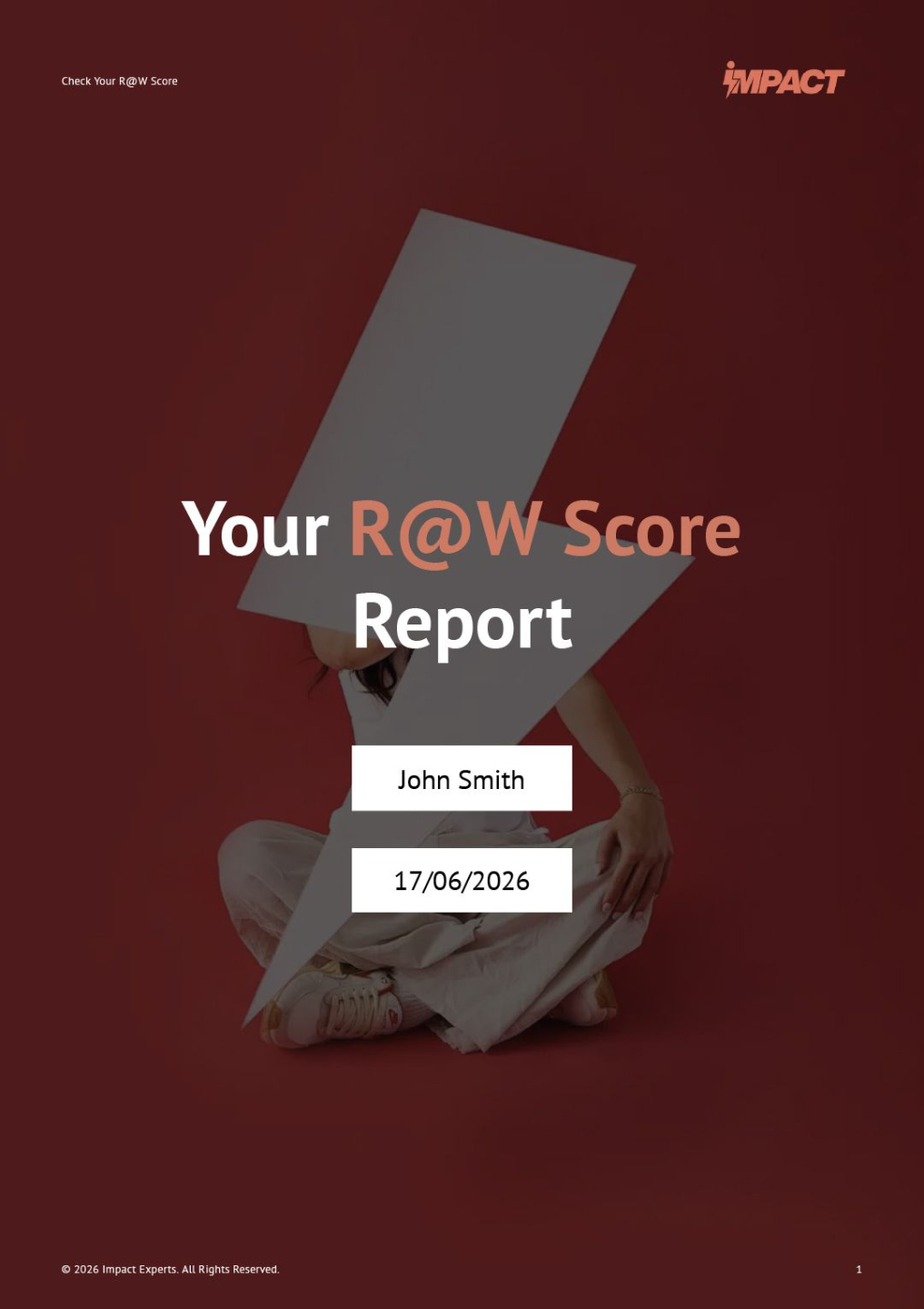
Take a look inside the R@W Score Report
Your custom report will show you what needs to be done.
Getting it right takes discipline and know-how. Most organisations have parts of this in place, but hardly any have it working in a way that would stand up under scrutiny.
DOWNLOAD SAMPLE REPORT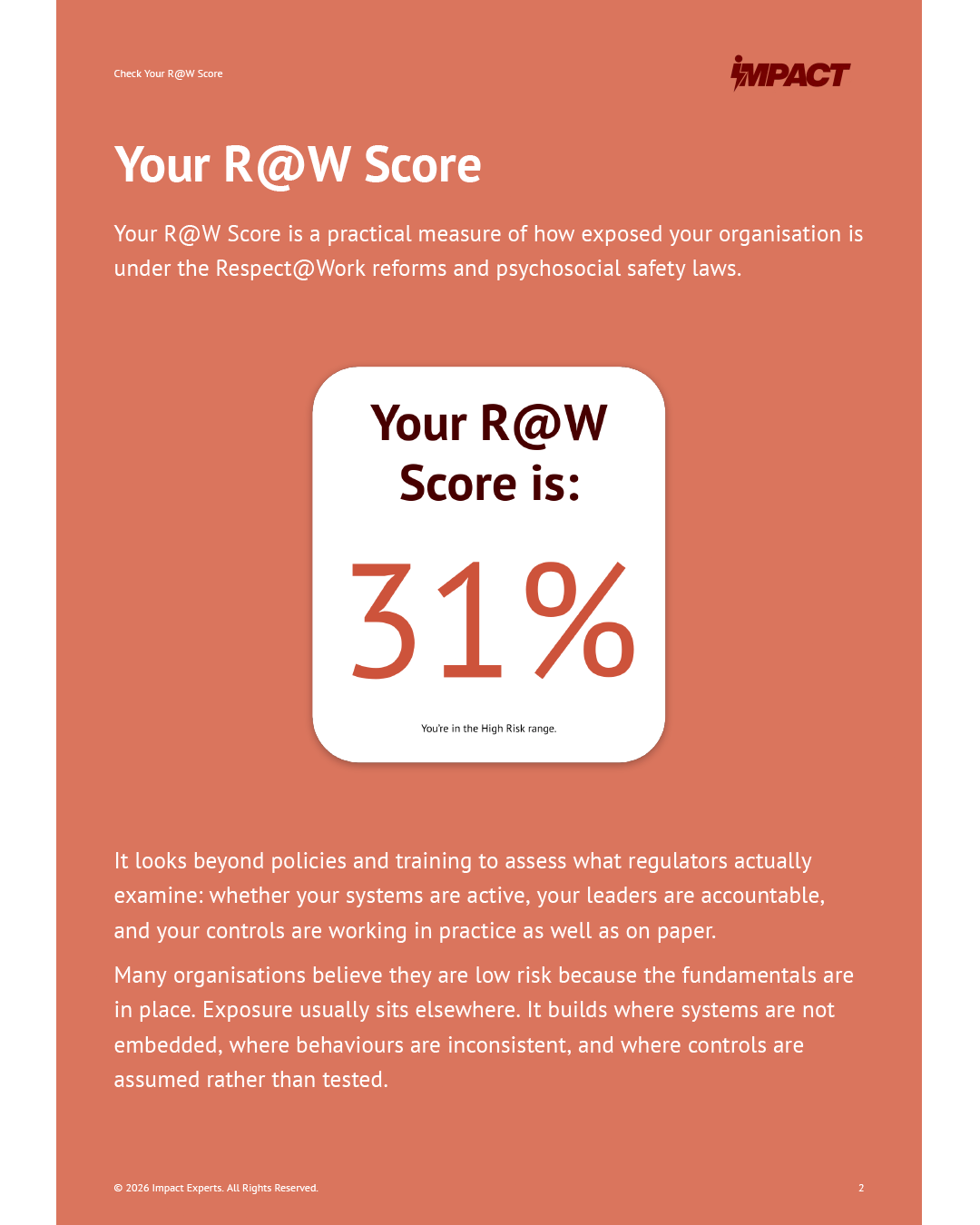
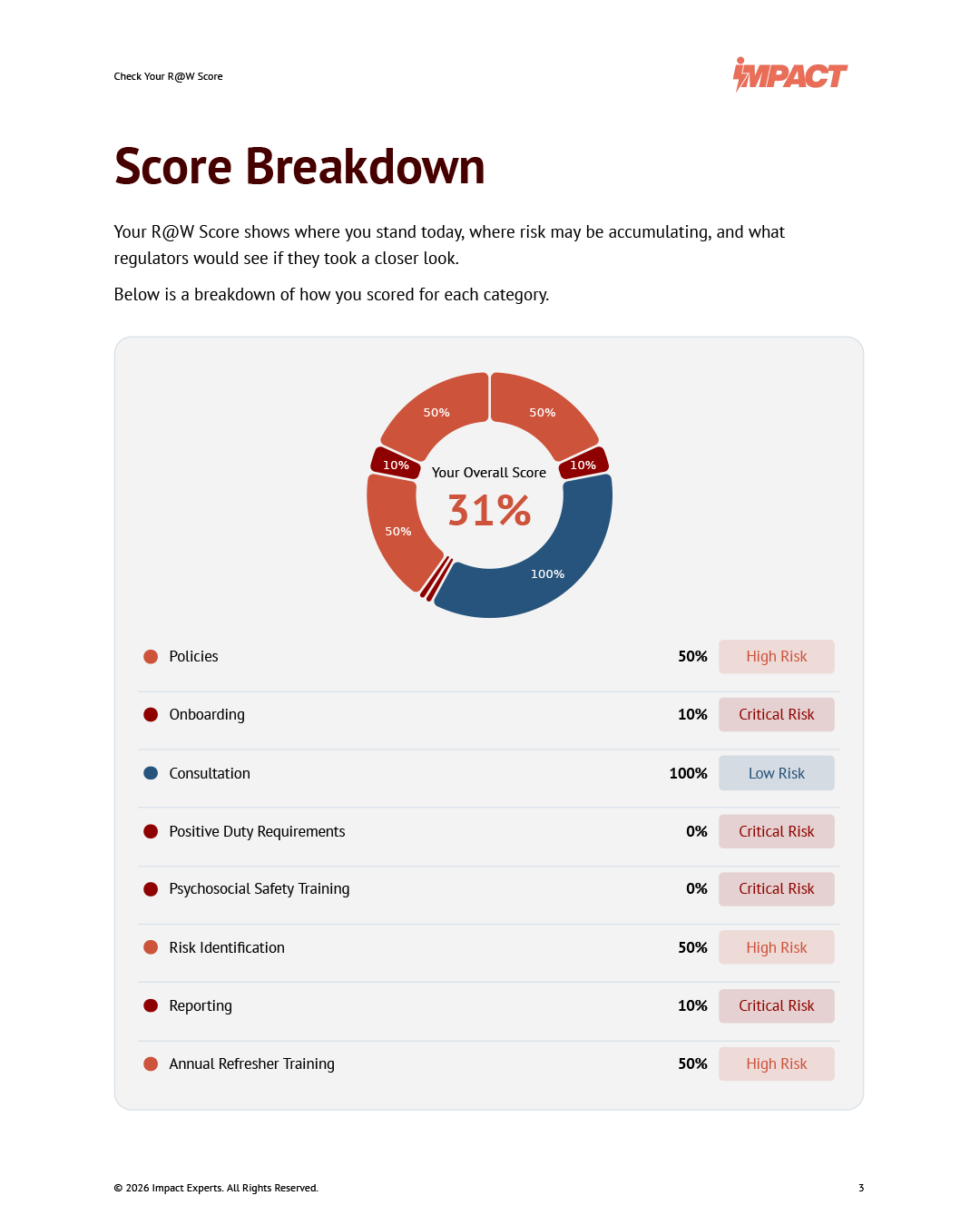
Your R@W Score covers these key risk areas

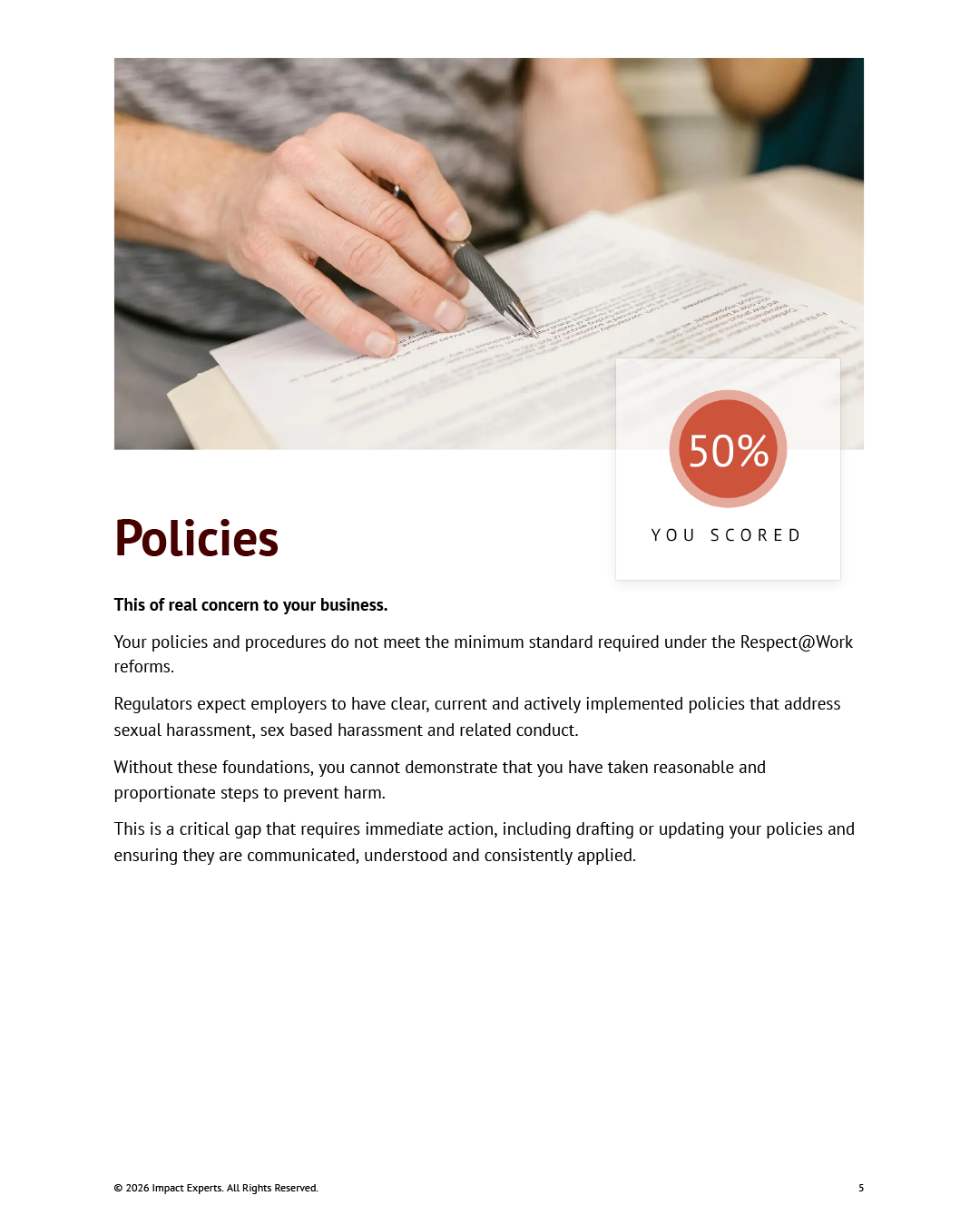
Policies
Having policies is the baseline. Regulators look at whether they are current, understood and actually used when decisions are made.
Onboarding
This is where expectations are set. If new starters don’t clearly understand behaviour, reporting and consequences, risk builds early.
Consultation
You are required to involve your people in identifying risks. If consultation is informal or inconsistent, gaps go unnoticed.
Positive Duty
Leaders are expected to actively prevent issues, not just respond after the fact. This is where most organisations fall short.
Psychosocial Safety
Pressure, behaviour and culture are core risk factors. These need to be managed with the same discipline as physical safety.
Risk Identification
It’s not enough to assume risk is low. You need a clear, documented view of where exposure exists across your business.
Reporting
If people don’t trust or use your reporting pathways, issues stay hidden. Regulators look closely at how safe and accessible these are.
Training
One-off training doesn’t reduce risk. It needs to be consistent, relevant and reinforced through leadership behaviour.